Imagine that a single decision choosing the wrong accounting software could cost you hours of manual work, delays in closing your accounts, and confusion in journal entries during any audit or internal review. On the other hand, choosing the right system could transform accounting from a “daily burden” into a clear, structured system that reads your numbers and suggests decisions: Where is cash leaking? Which products are most profitable? Are your reports ready at any moment?
In this guide, you’ll learn
What criteria truly define the “best accounting software in Saudi Arabia"?
A brief comparison between the most popular options.
Why is Odoo/Odoo software a top choice for many companies, and how can you determine if it's the right choice for you?
Why Is Choosing Accounting Software in Saudi Arabia a Sensitive Decision?
The Saudi market is growing rapidly, and with it comes an increased need for:
1.Financial discipline that ensures accurate and consistent journal entries.
2.Clear reports that help management make decisions based on numbers, not impressions.
3.Automation that reduces repetitive data entry and human error.
4.Scalability is crucial, as today's system must be capable of accommodating tomorrow’s branches.
The key idea
The “best software” isn’t the most famous—it's the one that best fits your business nature, size, and growth plans.
Criteria for Choosing the Best Accounting Software in Saudi Arabia (Before Any Comparison)
1) Smart Journal Entry Management (Not Just Recording)
Look for a system that helps you:
- Automatically generate journal entries from invoices, purchases, and payroll.
- Minimize manual entries unless necessary.
- Track the source of every transaction (Who entered it? What document supports it?).
The fewer manual entries… the fewer errors and the faster your monthly closing.
2) Financial Reports That Management Can Quickly Understand
It’s not enough for reports to simply “exist.” They must be:
- Customizable by department, branch, or project.
- Supported with easy-to-read dashboards.
- Showing key indicators like profitability, cash flow, receivables aging, and product performance.
3) Integration with Daily Operations (Sales, Inventory, POS)
An isolated accounting system means:
- Entering the same data twice.
- Number discrepancies between departments.
- Internal disputes about “who’s correct.”
The best solution supports integration with:
- Sales and invoicing
- Purchasing
- Inventory
- Point of Sale (POS)
- E-commerce (if applicable)
4) Ease of Use and Training
Even the strongest software fails if your team doesn’t use it.
- Arabic/English interface (if possible)
- Clear roles and permissions
- Quick training and reports understandable to non-accountants
5) Technical Support and Local Partner
In Saudi Arabia, having support that understands the local market is crucial:
- Fast response time
- Experience in chart of accounts setup
- Migration support from old systems
- Team and accountant training
6) Scalability and Customization
Ask yourself:
Will you open a new branch? Add a warehouse? Expand your sales team?
Choose a system that grows with you instead of forcing you to change it after one year.
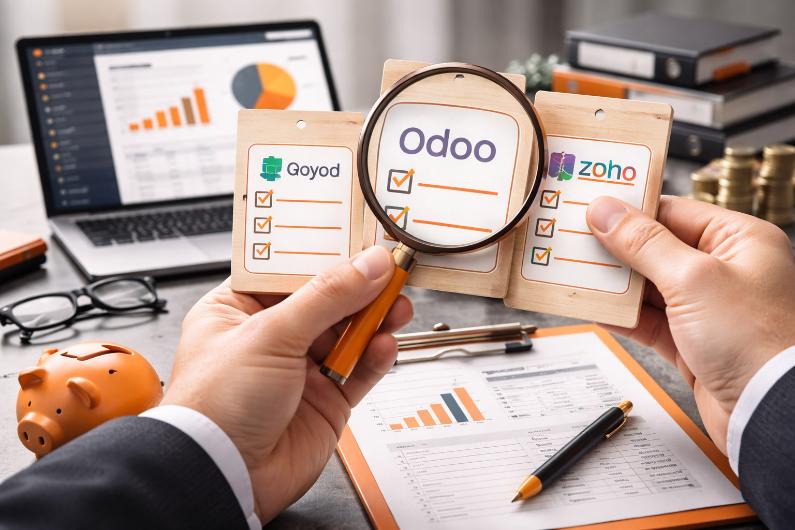
Quick Comparison: Popular Accounting Software in Saudi Arabia
This comparison is based on common suitability depending on company size and type.
Odoo / Odoo Software
Odoo Software is well-suited for companies seeking an integrated system that integrates accounting, sales, inventory, HR, and more—all while offering high scalability.
Qoyod
QuickBooks is a popular choice for small and medium businesses seeking a quick start with a cloud-based, accounting-focused system.
Zoho Books / QuickBooks
Good options for businesses that want simple cloud accounting, especially if operations are limited and do not require a full ERP.
SAP Business One / Oracle NetSuite
Typically for large or multi-branch enterprises with complex operations, higher budgets, and longer implementation timelines.
Why Is Odoo Considered One of the Strongest Accounting Software Options in Saudi Arabia?
Odoo is not just accounting software—it's a complete business operating system.
Its biggest strength is integrating accounting with all departments in one platform. That means:
- A sales invoice automatically creates an accounting entry.
- Inventory movements affect the cost of goods sold and reports without manual input.
- You can track profitability by product, branch, or salesperson from one system.
How Does Odoo Support Daily Accounting?
From an accountant and CFO perspective, Odoo offers:
- Automated journal entries linked to daily operations.
- Customer and vendor management with receivables/payables tracking.
- Filterable and analyzable financial reports.
- Detailed access control: who sees what and who approves what.
Flexibility and Customization Based on Your Business
The real difference appears when you have:
- Trading and inventory
- Services and projects
- Restaurants + POS
- E-commerce + shipping + payments
Odoo shines here because you activate only the applications you need and then expand gradually.
Practical Example
Imagine you own a distribution store in Saudi Arabia:
- Daily sales + returns + discounts
- Purchases from multiple suppliers
- Main warehouse + branch
- Weekly reporting needs
With Odoo, you can:
- Record a sale → issue an invoice
- The invoice → automatically generates accounting entries
- The same process → updates inventory
- End of week → ready reports on profitability, receivables, and stock
Result: Less time on data entry… more time on analysis and decision-making.
When Is Odoo Ideal?
- Companies expecting growth (branches, warehouses, multiple sales channels).
- Businesses needing accounting integrated with operations.
- Companies wanting one unified system instead of multiple disconnected tools.
A 7-Day Plan to Choose the Best Accounting Software (Without Overwhelm)
Days 1–2: Define Your Needs Clearly
Write down:
- Number of branches/warehouses
- Number of users
- Do you have inventory? POS? E-commerce?
- Top 5 monthly reports you need
- Current pain points (Where does accounting slow down today?)
Days 3–4: Test Only 2–3 Options
Don’t open 10 trials and get lost.
Choose 2–3 maximum (e.g., Odoo + Qoyod + one global option).
Day 5: Test a Real Scenario
Ask your team to execute:
- Sale + invoice + payment
- Purchase + supplier invoice
- Return
Then observe:
How many steps? How many errors? Are journal entries clear?
Days 6–7: Evaluate Implementation and Support—Not Just Features
Ask:
- Who will implement the system?
- What is the migration plan?
- Is training included?
- How long until we reach a usable stage?
FAQs
Is Cloud Accounting Better Than On-Premise?
Cloud systems are excellent for flexibility, access, and updates.
On-premise may be preferred for very specific requirements.
The key is security, permissions, and backups—regardless of type.
How Do I Ensure Journal Entries Are Correct?
- Automate entries from daily operations.
- Activate approval and review permissions.
- Require supporting documents for every entry.
Can Odoo Be Integrated with an E-Commerce Store?
Yes, typically through built-in integrations or ready/custom apps. Odoo already includes sales and inventory modules that help manage orders efficiently.
How much does Odoo accounting software cost?
Discover Odoo accounting features and pricing, and see how it automates journal entries and financial reporting efficiently. Visit the official Odoo website to learn more
Conclusion
Choosing the best accounting software in Saudi Arabia is not about the name—it's about the system’s ability to:
- Organize journal entries and reduce manual work,
- Provide clear and fast reports,
- Integrate with sales, inventory, and POS,
- Grow with your company without rebuilding everything from scratch.
That’s why Odoo stands out as a powerful option for businesses seeking an integrated financial and operational system, while solutions like Qoyod may be more suitable for those seeking a fast, straightforward accounting start.
Let Us Help You Choose the Right System
If you’d like, write in the comments: What type of business do you run (trading / services / restaurants / contracting) and how many branches do you have, and I’ll suggest the best selection scenario between Odoo and its alternatives based on your needs.
Or contact us for a consultation to create a selection and implementation plan that reduces errors and speeds up your financial closing.